
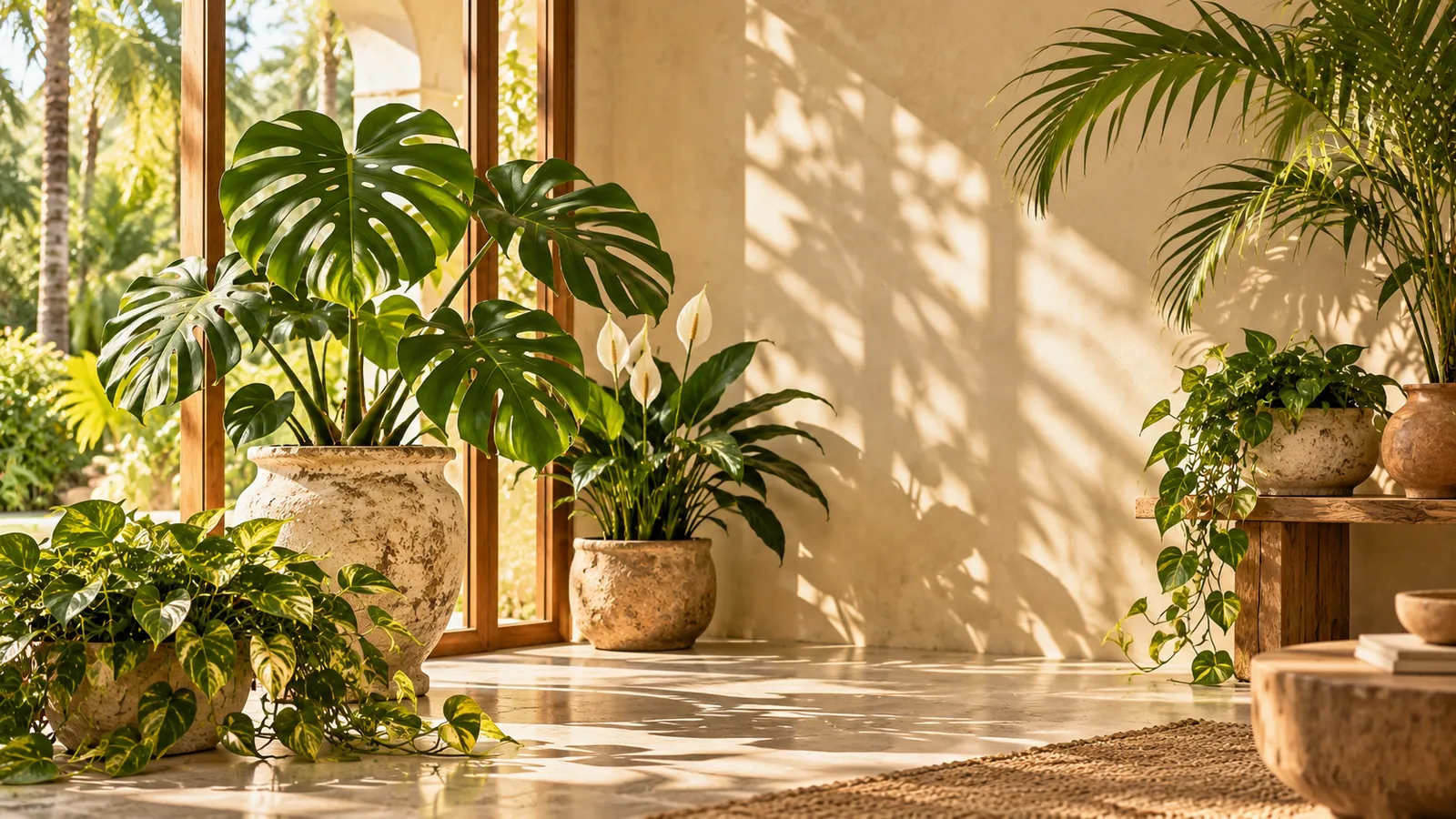
“Bright indirect light” describes a plant's exposure, not a particular window direction. Light arriving at the glass is not necessarily what reaches a shelf two metres inside the room. Buildings, roof overhangs, window film, curtains, trees and time of day all change the amount and duration of useful light.
Start at the leaves
Stand where the leaves will be. Observe the position in the morning, at midday and in the afternoon, ideally on more than one day. Does direct sun strike the plant, or is the room illuminated by sky light reflected from outside? A west-facing window with a deep overhang may be shaded; an east-facing window across an open courtyard may receive direct morning sun. Compass direction is context, not a care verdict.
Three observations to record
- Direct exposure: When does a defined patch of sun actually reach the leaves, and for how long?
- Diffused brightness: When the sun is not directly on the plant, is the position lit by open sky or heavily blocked by walls and roof?
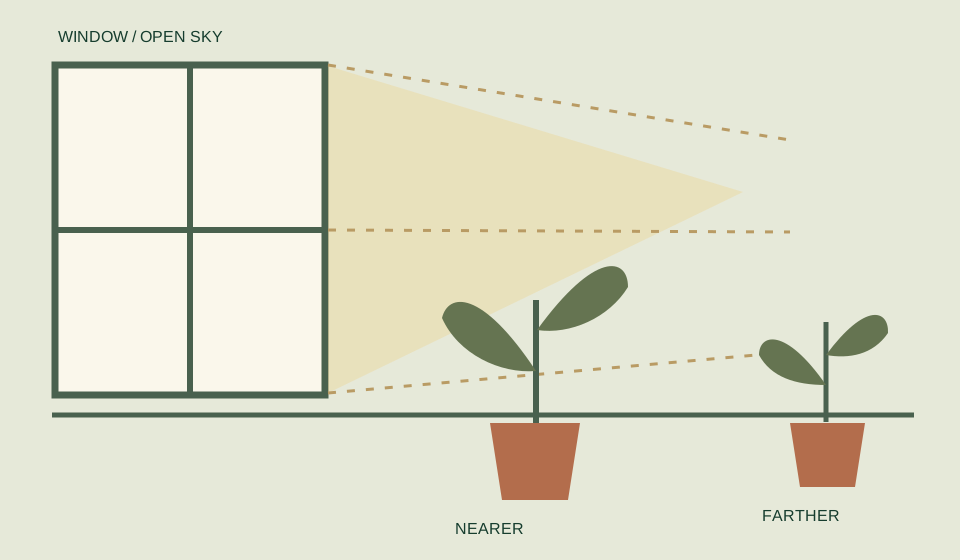
- Distance and obstruction: How far is the plant from glass, and what blocks the path between the window and the plant?
Do not assume a room's visual brightness is a precise measure of photosynthetically active light. A phone lux reading can help compare positions if taken consistently, but a lux figure is not interchangeable with PPFD or daily light integral (DLI). A fixture's electrical watts are likewise not its delivered plant-light measurement.
Philippine conditions add variation
Cloud, haze and the angle of the sun alter what enters the room; high-rises can shade one another and rain exposure may affect a covered balcony. PAGASA documents differing rainfall patterns across Philippine climate types, so a single “rainy season watering chart” would ignore local context. Recheck a plant position after a major seasonal change or when moving it outside.
Apply the observation
Use the plant placement worksheet to record direct sunlight, blocked sky, rain and airflow. Then consult an individual species profile for a sourced starting point. Increase exposure gradually; a plant acclimated to indoor shade can react badly to a sudden move into direct tropical sunlight.