
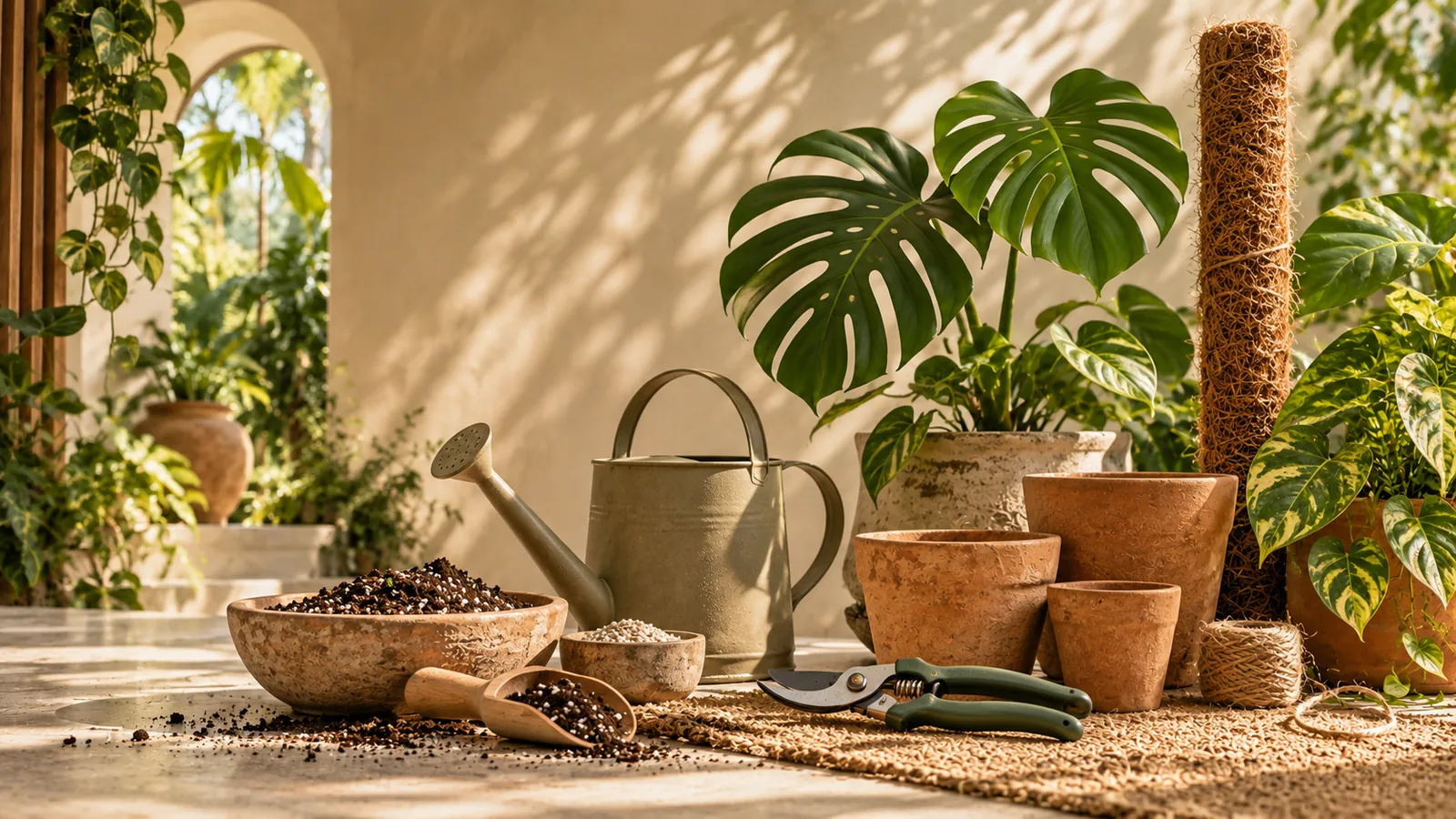
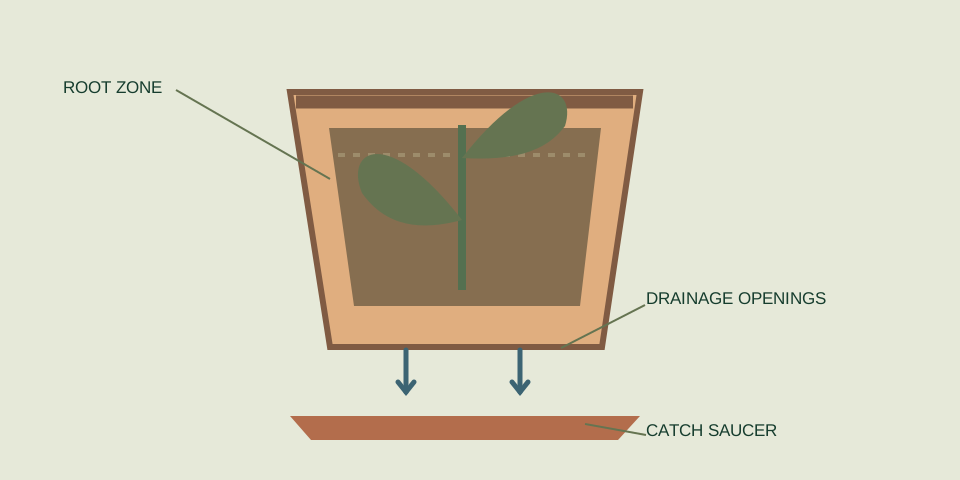
A pot, a saucer and a decorative cachepot do different jobs. A growing pot holds the roots and medium; a drainage hole gives excess water somewhere to leave; a saucer catches that water temporarily; and a cachepot hides the nursery pot. The last two are not substitutes for drainage.
Choose the growing pot first
Check the bottom. If water cannot escape, it can remain around roots when the medium is overwatered. If using an attractive outer container, lift the inner nursery pot after watering and empty collected water. Keep a new pot proportionate to its existing root mass instead of automatically choosing an oversized vessel.
Media are not single-purpose ingredients
The bag labelled “soil” may have different components and physical behavior from another bag. Air space, water retention and the way the mix settles all matter. Coir, bark, perlite and other components can be used in mixes, but no ingredient guarantees drainage in a pot without an opening. Do not publish one universal mix recipe for every plant.
Match equipment to a real problem
- A draining nursery pot can be inexpensive and practical inside a decorative cover.
- A saucer protects surfaces if checked and emptied.
- A support matters for a climbing Monstera or a pothos trained upward.
- A watering can with a controlled spout helps wet the medium without splashing furnishings.
- A light measuring instrument can be useful for comparison, provided its units and limits are understood.
Before buying, use the supplies decision guide to identify the problem and compare product specifications. Retail availability is not an endorsement.