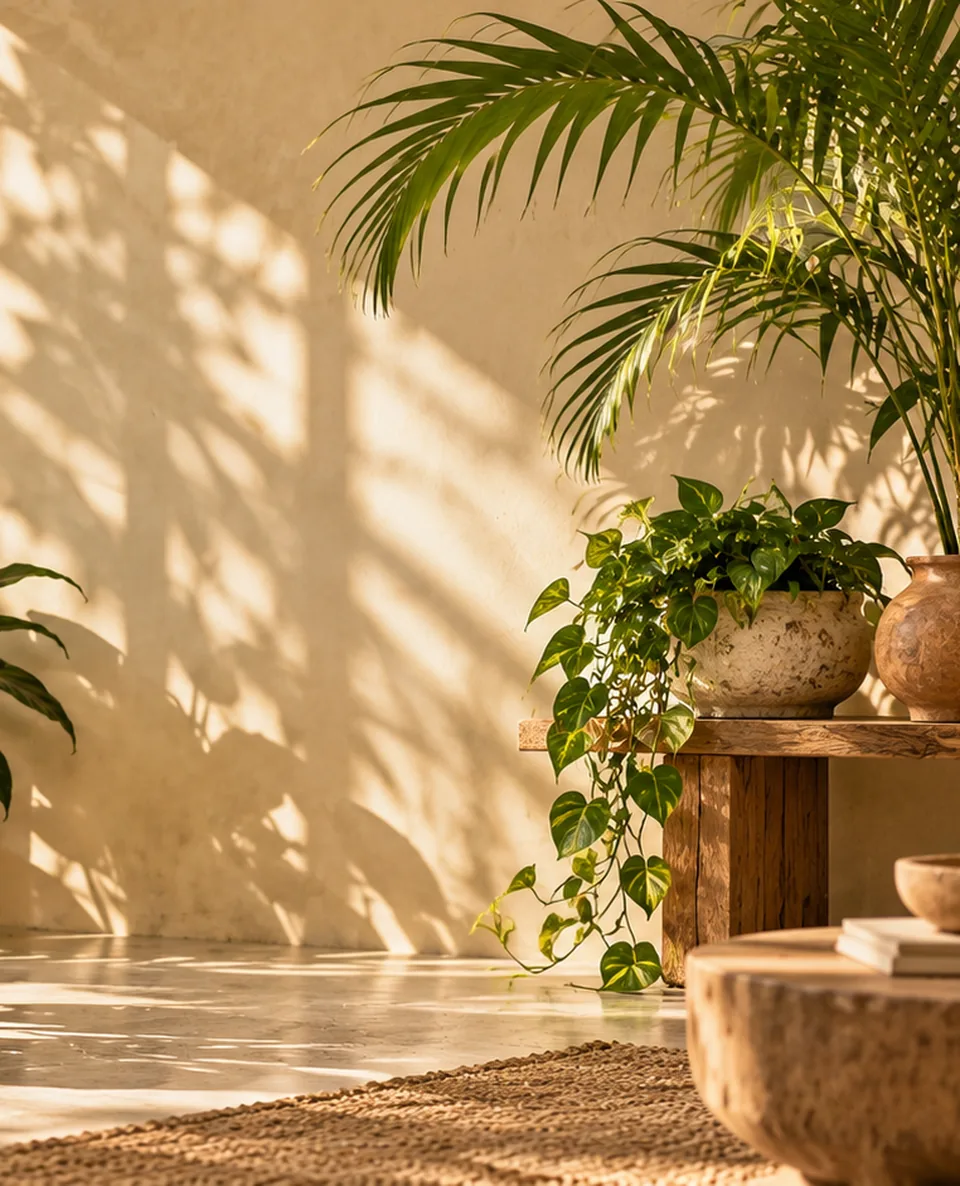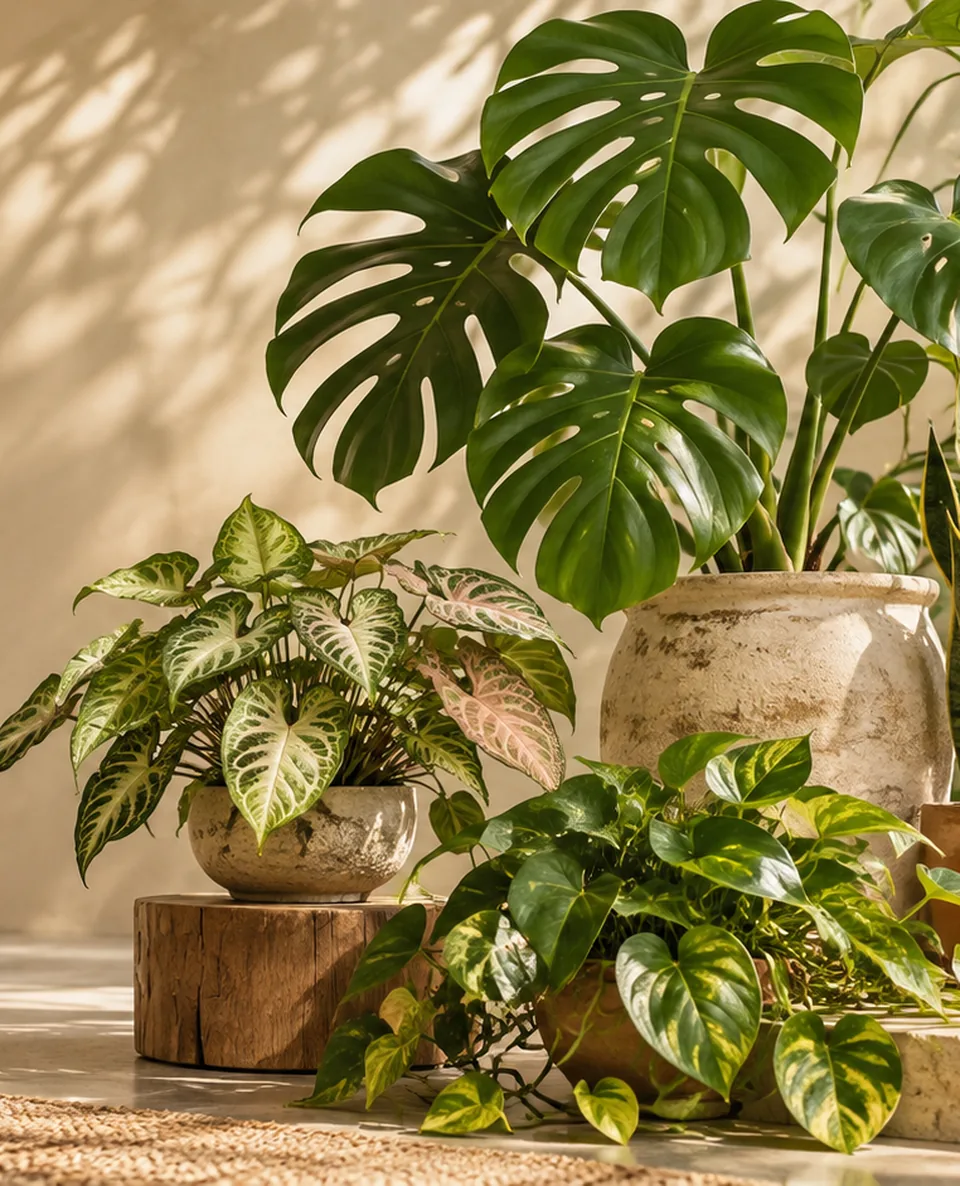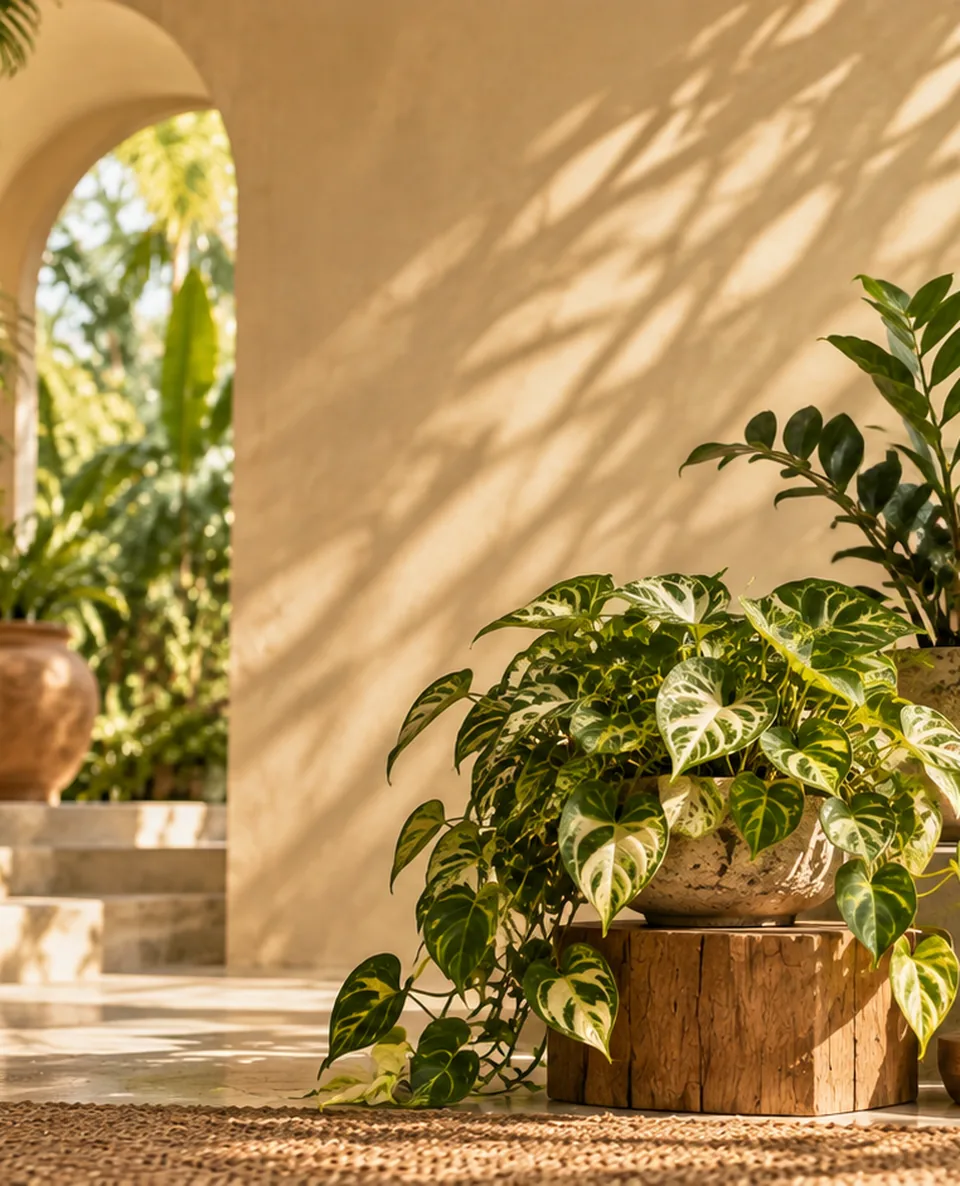
Recognise the plant.
Grooved leaf stalks and lack of conspicuous free stipules help distinguish it from heartleaf philodendron; young foliage can look similar.
Individual cultivated varieties may differ from the documented specimen. If a nursery's common name is ambiguous, compare botanical features or obtain the exact scientific name before relying on a care profile.
Start with the light.
A bright room where direct afternoon sun is filtered; it also tolerates lower light, usually with slower growth.
Observe the actual position rather than deciding from the compass direction alone. Note when sunlight lands on the leaves, whether a roof or nearby building filters sky light, and if the spot changes during a cloudy or wet period. Use the plant placement worksheet to keep those observations together.
Watch, then water.
Let the top portion of the potting medium become dry, then water thoroughly and drain the excess.
Watch the spacing between new leaves and whether variegation changes after a move.
Use a pot with a drainage outlet and a support if you want climbing rather than trailing growth.
What works in one pot will not necessarily transfer to another. See why fixed watering calendars fail and our container guide.
Account for the room.
Behind glass, west-facing exposure can become hot; in a covered outdoor position check whether heavy rain reaches the pot.
Actual rain, shade, ventilation and air-conditioning matter more than assuming that every Philippine home has one humidity or watering schedule. If moving a plant between indoor shade and an outdoor position, increase exposure gradually and keep inspecting the root zone.
A safety note. Store cuttings away from children and pets; plant material contains irritating calcium oxalate crystals.
Sources & photo.
The botanical and horticultural starting point is NC State Extension Gardener Plant Toolbox: Epipremnum aureum. Philippine weather context is drawn from PAGASA's climate overview. Those institutional sources describe general conditions, not an on-site diagnosis.
The original reference photograph is credited to David J. Stang under CC BY-SA 4.0. If the image is transformed or resized by its host, the photo's applicable license governs that adaptation.